Pet health · 2 min read
Dog dental care at home: brushing, chews, and when to book a cleaning
How to keep your dog's teeth clean between professional cleanings: brushing technique, what products help, warning signs of dental disease, and what anaesthesia-free cleaning can and cannot do.
By PGH Team · Published
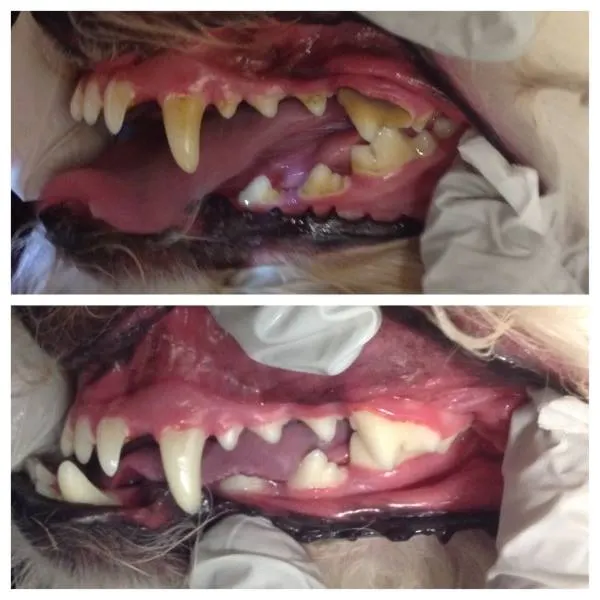
Bad breath is not normal for dogs. It is usually the first sign of plaque hardening into tartar and bacteria working under the gum line. Left alone, that leads to gum disease, tooth loss, and bacteria entering the bloodstream. The good news is that a few minutes a day prevents most of it.
Brushing: the one thing that works
Brushing is the only home method that cleans along the gum line. Aim for daily. Three times a week is the minimum that makes a difference.
- Start with your finger. Rub a little pet toothpaste on the outside of the teeth for a few days so your dog learns the taste.
- Move to a finger brush or soft toothbrush. Angle it at 45 degrees to the gum line and brush in small circles.
- Focus on the outside surfaces. The tongue does a reasonable job on the inside. The outer upper molars and canines collect the most tartar.
- Keep it short. Thirty seconds a side. Stop before your dog gets fed up and finish with praise.
Only use a toothpaste made for dogs. Human toothpaste contains fluoride and sometimes xylitol, which is poisonous to dogs.
What helps, and what is marketing
- Dental chews with a VOHC seal reduce plaque on chewing surfaces. Useful, not sufficient.
- Water additives have modest evidence. Harmless if your dog will drink the water.
- Raw bones carry a real risk of fractured teeth and gut injury. Vets are divided; we do not recommend them.
- Dry food alone does not clean teeth, whatever the bag says.
Warning signs
Book a vet check if you notice:
- Breath that smells rotten rather than just doggy
- Red or bleeding gums
- Brown or yellow build-up at the gum line
- Dropping food, chewing on one side, or pawing at the mouth
- Loose or missing teeth
- Swelling under the eye, which can be a tooth-root abscess
Where anaesthesia-free cleaning fits
PGH hosts a visiting animal dentist who removes tartar by hand, with no sedation, after a brief wellness check. It takes 20 to 40 minutes and suits calm, hand-friendly dogs with routine build-up. See how it works and prices.
It does not replace a veterinary dental under anaesthesia, which can clean below the gum line, X-ray roots and extract damaged teeth. If the dentist finds gum disease or anything beyond a routine clean, you will be referred to your vet.
A realistic routine
Brush three to seven times a week. Add a dental chew on the days you miss. Book a professional cleaning every six to twelve months, sooner for small breeds, and a vet check once a year. Your dog's teeth will last their lifetime, which is the whole point.
Questions we get asked
- Can I use human toothpaste on my dog?
- No. Human toothpaste contains fluoride and often xylitol, both toxic to dogs. Use an enzymatic pet toothpaste.
- Do dental chews replace brushing?
- No. They help with plaque on the chewing surfaces but do nothing for the gum line, which is where disease starts.
- Is anaesthesia-free cleaning as good as a vet dental?
- It removes visible tartar above the gum line without sedation. It cannot clean below the gum line, take X-rays or extract teeth. It is maintenance for calm dogs with healthy mouths, not treatment for dental disease.
Sources
Written by
The PGH team
Groomers and hotel staff at Pets Grooming Hotel, Main Place Mall, Subang Jaya. These guides are based on what we see on the grooming table and in the hotel every week. They are general advice, not a substitute for your vet.